What Emotional Intelligence Looks Like at Work
Jobs for people with high emotional intelligence are roles where much of the work is understanding, calming, teaching, or persuading other people. Strong fits include nursing, counseling and psychology, social work, teaching, customer service, event and funeral planning, public relations, human resources, and marketing analysis. Each of these emotional intelligence jobs asks you to read people accurately and stay steady when they’re upset.
Emotional intelligence is the ability to understand and manage emotions while recognizing and understanding how others feel. This quality allows one to adjust their behavior and determine how they respond to others accordingly. In this article, emotional intelligence includes self-awareness, self-regulation, empathy, and social skills such as listening and handling criticism constructively.
These skills show up in hiring research, too. In the World Economic Forum’s Future of Jobs Report 2025, surveyed employers rank empathy and active listening among the top 10 core skills today. The report reflects global employer expectations, so it describes broad demand more than any single job.
Many people discover these strengths through stressful jobs, like calming a frustrated caller, before they see them as a career asset. They’re also learnable skills. Practices for emotional regulation at work, like pausing before you reply, can strengthen them in any role.
Healthcare and Helping Careers
Registered Nurse
Nurses deliver difficult updates, manage family anxiety, and coordinate with busy teams across a long shift. The U.S. Bureau of Labor Statistics registered nurse outlook lists compassion and emotional stability as important qualities, noting that nurses “should be caring and empathetic” with patients. BLS reports a median annual wage of $97,550 (May 2025) and projects employment to grow 6% from 2025 to 2035.
Self-regulation helps nurses stay calm and kind through high-stress shifts. A nurse who notices their own frustration rising can take a breath and say, “I know waiting is hard. I’ll check on the test results and come back in ten minutes.” That steadiness can help a worried family still feel heard late in a twelve-hour shift.
Psychologist or Mental Health Counselor
Like social workers, psychologists help others live better lives. They work with their own emotions and their clients’ emotions in every session, choosing words and timing with care. Self-awareness forms the base of this work, because it’s hard to help someone manage feelings you can’t recognize in yourself.
The work can be emotionally taxing, so counselors need ways to recover between demanding sessions. The U.S. Bureau of Labor Statistics mental health counselor outlook reports a $59,350 median annual wage (May 2025) for substance abuse, behavioral disorder, and mental health counselors. BLS projects employment for this combined group to grow 18% from 2025 to 2035.
BLS also lists compassion, listening, and patience as important qualities for these counselors. According to BLS, mental health counselors typically need a master’s degree and must be licensed in every state.
Social Worker
Social workers support people through eviction, benefit denials, and family crises. The U.S. Bureau of Labor Statistics social worker outlook lists compassion, including “patience and empathy for their clients,” and interpersonal skills as important qualities. BLS reports a median annual wage of $61,780 (May 2025) and projects employment to grow 6% from 2025 to 2035.
Empathy and patience can help social workers see the distress behind difficult behavior. Curiosity about what’s beneath the surface can reveal a need the client hasn’t named yet. A client who snaps during an intake meeting may be scared about losing housing.
A calm question such as “What would help you most today?” can open the conversation again. BLS notes that clinical social workers need a master’s degree and a license.
Teacher
A class of twenty students presents twenty different learning abilities, and disseminating information to these diverse groups and ensuring that each of them has their needs met can be emotionally draining. Emotionally intelligent teachers can motivate students and use observation to understand behavior and well-being. They may notice when a usually talkative student goes quiet, or when frustration builds before a test.
When disruptive behavior happens, emotionally intelligent teachers look for social and environmental causes before reacting in anger. Patience and Curiosity, two of the 5 Core Competencies in the Theory of Peaceful Leadership, guide that response. A teacher might pull a student aside and say, “You seem frustrated today. What’s going on?”
The same empathy extends to parents who feel worried about their child and to colleagues who share heavy workloads. People who absorb others’ emotions may do so at their own expense, and over time that can add to stress. Self-regulation helps teachers care deeply for students while protecting their own well-being.
Customer-Facing Careers
Customer Service Representative
On a typical day, a customer service representative works as a company’s liaison, providing customers with company product and service information, answering queries, and resolving emerging problems, sometimes simultaneously. Emotional intelligence can help reps keep sharp comments from feeling personal. It also helps them respond with genuine sympathy and a sincere apology.
A reply such as “I can hear how frustrating this has been. Let me see what I can do right now.” can help lower the tension early in a conversation. The same approach works in writing, and guidance on responding to frustrated customers shows how to keep emails calm and specific.
The U.S. Bureau of Labor Statistics customer service representative data lists listening, patience, and interpersonal skills as important qualities. BLS also projects employment to decline 5% from 2025 to 2035, with about 289,500 openings a year from replacement needs. The de-escalation and self-regulation skills reps build can carry into supervisory, client success, and training roles.
Wedding Planner or Funeral Planner
Wedding and funeral planners work toward different goals but will work with emotionally charged individuals. Wedding clients often feel deadline pressure, while grieving families still face many decisions during a painful week. Planning a wedding or a funeral is like taking another person’s vision and organizing the event to reflect that vision.
Success means setting aside personal preferences and honoring clients’ wishes, even when you’d choose differently. Appreciation and patience help planners take time to understand what people want. A planner might ask, “What matters most to you about this day?” and then build every decision around that answer.
Communication and People-Strategy Careers
Public Relations Professional
Public relations professionals are responsible for speaking on behalf of an individual or an organization. Self-awareness helps spokespeople stay composed during a controversy, when reporters and the public may be angry.
Reading public emotion before deciding what to release can shape whether a message calms people or adds to their frustration. The role also involves saying no with care, as in “I can’t share that yet, but I’ll update you as soon as I can.”
Human Resources Specialist
HR specialists handle hiring conversations, policy questions, and workplace conflict, often with people who feel anxious or upset. Listening and interpersonal skills can help employees feel heard in tense meetings. Active listening habits, such as summarizing what you heard before you respond, can build trust over time.
Empathy works well alongside clear, consistent standards that apply to everyone. A specialist might say, “I understand why this feels unfair, and I’ll walk you through how the policy applies.”
Marketing Analyst
Making decisions on what a customer might need requires significant insight, like trying to think like the customer. Marketing analysts can use perspective-taking to anticipate how customers will feel about a product or react to a campaign.
They also balance customer interests with company goals, which takes empathy for both groups. Before a launch, an analyst might ask, “If I were a first-time buyer, what would confuse me here?”
Is Emotional Intelligence Enough to Succeed in These Careers?
Emotional intelligence is one meaningful factor in job performance, and it works alongside other factors. A landmark 2011 meta-analysis of emotional intelligence by O’Boyle and colleagues in the Journal of Organizational Behavior found a positive 0.28 corrected correlation with performance. O’Boyle and colleagues also cautioned that their data didn’t support claims that EI is the single most important predictor of performance.
However, regular interpersonal contact with diverse groups of people can be overwhelming for any individual, high emotional intelligence notwithstanding. Emotions left to run wild can hijack logic and good reason, even in strong relationships. People-heavy careers also call for learned skills in self-regulation, de-escalation, and conflict resolution that hold up under stress.
For psychologists, verbal de-escalation training can help them make the right word choice while reading nonverbal cues and helping clients manage their emotions. Instructors may use verbal de-escalation skills to support calmer classroom interactions. Practical skills for handling conflict, such as naming the issue calmly and asking what the other person needs, bring the same habits into any workplace.
If there’s an immediate threat of violence or serious harm, follow your organization’s emergency procedures and involve security, HR, or emergency services. De-escalation supports safety but never replaces safety protocols.
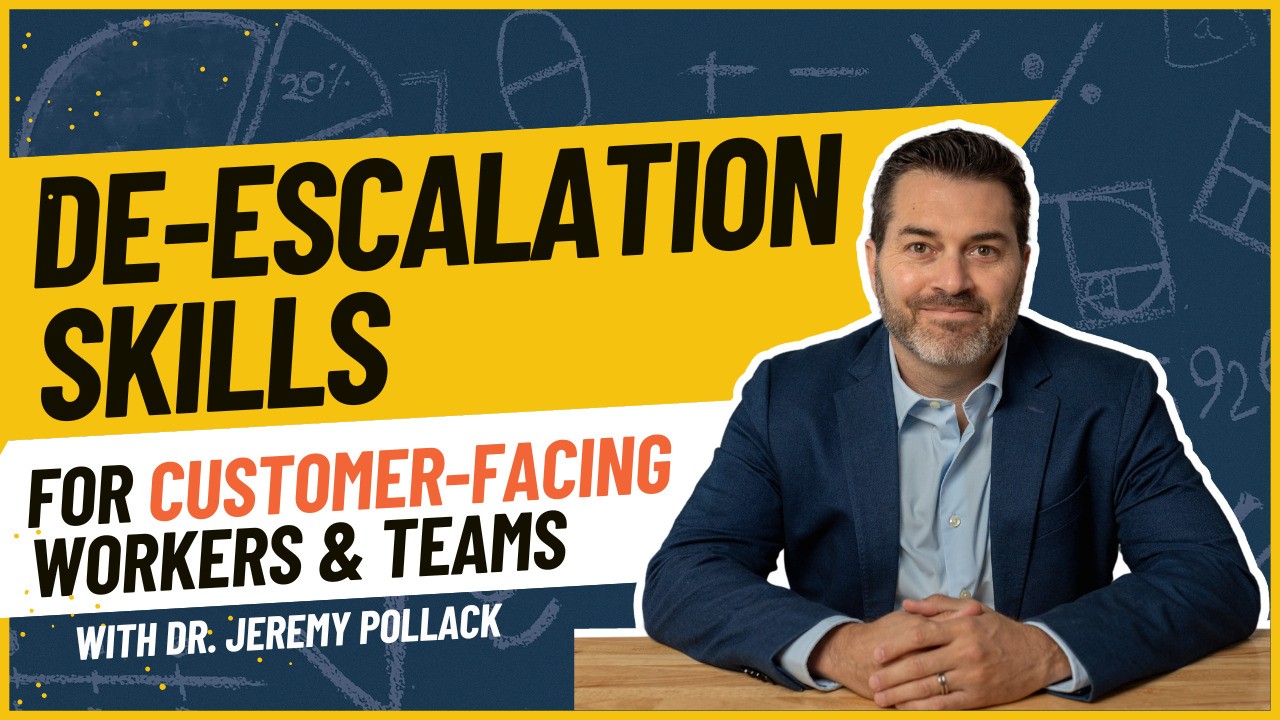
At Peaceful Leaders Academy, we encourage people to build on their emotional intelligence through the 5 Core Competencies of Patience, Engagement, Appreciation, Curiosity, and Empowerment. Practicing them in low-stakes moments, like a routine team meeting, can make them easier to reach during a tense conversation.
Frequently Asked Questions
Can You Develop Emotional Intelligence?
Yes, the habits behind emotional intelligence can be practiced like other workplace skills. Pausing before responding, naming your own emotions, and reflecting back what others say are simple ways to start. Ideas for building empathy as a leader offer more ways to practice, whether or not you manage people yet.
How Do You Show Emotional Intelligence in a Job Interview?
Show emotional intelligence in a job interview by sharing a specific story about a tense interaction you handled. Describe what you noticed, how you stayed calm, what you said, and what happened next.
Build the Skills Behind Your Emotional Intelligence
Whatever career you choose, de-escalation and self-regulation skills can help you use your emotional intelligence under pressure. Self-paced online courses let you practice these skills for customer service, healthcare, education, and other frontline settings. Explore Peaceful Leaders Academy de-escalation courses to find the course that fits your work.