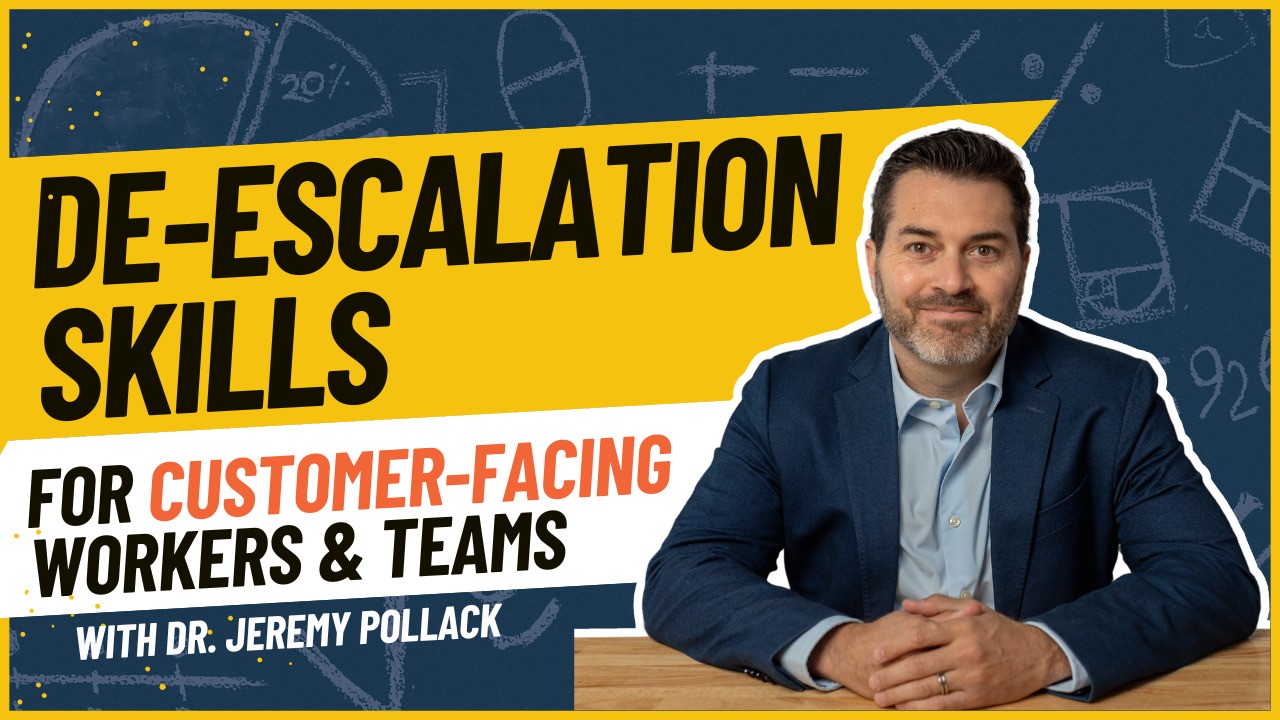
Knowing how to deal with abusive customers is an essential skill for customer service staff working in retail, sales, phone support, and other frontline team environments. An abusive customer can quickly turn a routine interaction into one of the tense situations employees remember long after the conversation ends.
Abusive behavior may involve verbal abuse, harassment, intimidation, aggressive communication, or repeated inappropriate comments that make employees feel uncomfortable or even feel unsafe. In these moments, the goal is not simply to resolve the issue. The goal is to protect employees, maintain psychological safety, and respond professionally while following company policies.
Organizations that provide structured online de-escalation training for customer service often help customer service teams communicate more effectively and manage difficult customers with greater consistency.
Upset Customers vs Abusive Customers
Not every upset customer is abusive.
Upset customers are often frustrated by delays, billing issues, service problems, or unmet expectations. Even when emotions are elevated, the conversation is still focused on resolving the customer’s concerns.
An abusive customer behaves differently.
Abusive behavior may include:
- Verbal abuse toward employees
- Harassment or discriminatory language
- Aggressive interruptions
- Threats toward a supervisor or the company
- Personal attacks instead of problem-solving
- Repeated inappropriate or abusive behavior
This distinction matters because response strategies are different.
Upset customers usually need empathy, acknowledgment, and solutions. Abusive behavior requires boundaries, structured escalation, and employee protection.
Recognizing Escalation Early
Customer service staff should learn to recognize escalation patterns before interactions fully break down.
Warning signs may include:
- Increasing aggression in tone or body language
- Refusal to listen
- Talking over employees repeatedly
- Escalating anger during a difficult call
- Harassment directed toward the support team
- Attempts to intimidate employees or management
Early recognition gives employees more control over the interaction and improves the likelihood of de-escalating the situation before it worsens.
One of the best tools for handling tense situations is awareness. Employees who recognize escalation early are often better prepared to respond calmly rather than react emotionally.
Immediate Response: Stay Calm and Acknowledge Frustration
When dealing with abusive customers, employees should focus first on emotional regulation and communication pacing.
The ability to stay calm is critical.
Helpful response strategies include:
- Pause before responding
- Lower vocal intensity
- Acknowledge frustration without accepting abuse
- Focus on listening carefully
- Avoid defensive reactions
- Keep communication short and clear
Helpful examples:
“I understand this situation is frustrating.”
“I want to help resolve the issue.”
“Let me make sure I understand your concerns.”
Acknowledging emotions helps people feel heard, even when the interaction remains difficult.
This does not mean employees should tolerate abuse. It means they should respond professionally while maintaining control of the conversation.
Setting Boundaries With Abusive Behavior
When inappropriate or abusive behavior continues, boundaries must become more direct.
Customer service employees should not be expected to absorb harassment, verbal abuse, or intimidation without support.
A structured escalation process may look like this:
First Boundary
“I want to help, but I cannot continue the conversation if abusive language continues.”
Second Warning
“If the abusive behavior continues, I will need to end this interaction or involve a supervisor.”
Final Step
“I’m ending this conversation because the communication has become inappropriate.”
Clear boundaries help protect employees while maintaining professionalism.
They also reinforce psychological safety for the broader support team.
De-Escalation Techniques During Difficult Interactions
Escalating difficult customer interactions requires more than scripted responses.
Employees should pay attention to:
- Tone of voice
- Body language during in-person interactions
- Pacing of the conversation
- Emotional intensity
- Whether the customer appears to feel heard
- Whether the interaction is becoming unsafe
Best practices include:
- Avoiding arguments
- Not matching aggression with aggression
- Redirecting toward solutions
- Allowing brief venting without losing control
- Using calm and neutral language
In retail or face-to-face environments, body language matters significantly. Open posture, appropriate distance, and controlled movement can help reduce tension during emotionally elevated moments.
The goal is not to “win” the interaction. The goal is to protect employees while maintaining as much stability and professionalism as possible.
When to Escalate to a Supervisor or Manager
Some interactions should not remain with frontline employees.
Escalation may be necessary when:
- Threats continue
- Harassment becomes severe
- Employees feel unsafe
- The conversation cannot be redirected
- Other customers are affected
- The interaction begins disrupting service operations
A supervisor or manager may be better positioned to take over the interaction, reinforce company policies, or terminate the conversation appropriately.
Employees should know escalation is a support process, not a failure.
Strong management support improves employee confidence and helps protect long-term well-being across the team.
Protecting Employee Psychological Safety
Repeated exposure to abusive customers can affect morale, burnout, emotional regulation, and overall performance.
Organizations should actively protect employee well-being through:
- Debriefing after difficult calls
- Breaks following high-stress interactions
- Supervisor support during escalation
- Clear company policies regarding abuse
- Consistent documentation procedures
- Ongoing communication training
Maintaining psychological safety is not only about employee comfort. It directly affects customer service quality, retention, and operational stability.
Employees who feel safe and supported are often better equipped to respond calmly under pressure.
Organizations looking to strengthen communication consistency and workplace response systems may also benefit from structured online conflict resolution & management course training to reinforce healthier communication practices across teams and leadership.
Documentation and Follow-Up
Documentation helps organizations maintain accountability and improve future response systems.
After abusive interactions, employees should record:
- Time and nature of the interaction
- Specific abusive behavior observed
- Warnings provided
- Supervisor involvement
- Whether the interaction was terminated
- Follow-up actions taken
Consistent documentation also helps management identify patterns involving repeat abusive customers or operational issues contributing to escalation.
Conclusion
Learning how to deal with abusive customers is essential for protecting employees, maintaining professionalism, and supporting long-term customer service stability.
While upset customers often need empathy and problem-solving, abusive behavior requires boundaries, structured response systems, and consistent support from supervisors and management.
When customer service staff stay calm, recognize escalation early, and apply de-escalating communication techniques, they improve safety without sacrificing professionalism.
Strong company policies, supportive leadership, and effective communication training help organizations create safer and more resilient customer service environments under pressure.